
Default Klaviyo settings are quietly burning a hole through your ad budget. Here’s a practical breakdown of Klaviyo abandoned cart flow timing, what the default setup gets wrong, and how custom triggers protect your margin instead of leaking it to competitors.
Relying on out-of-the-box templates often caps your recovery performance. We saw this firsthand with an electronic music and DJ equipment retailer that came to us running outdated flows, an inconsistent campaign schedule, and zero customer segmentation.
We rebuilt their setup around real buyer behavior instead. The result, automated flows alone now drive 81% of their total attributed email revenue. You can read the full breakdown of what we changed and why in our complete case study.
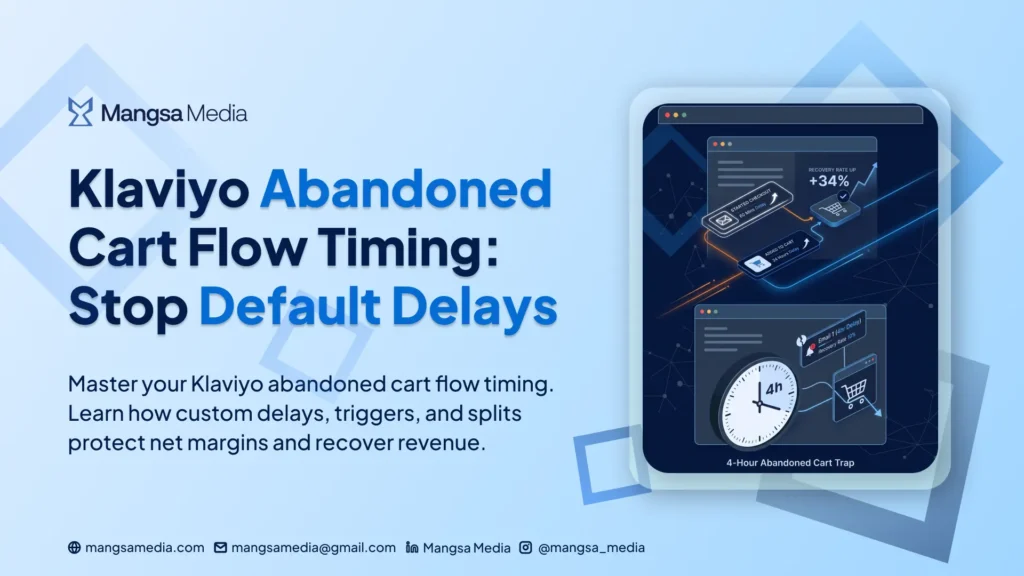
Why Your Klaviyo Abandoned Cart Flow Timing Breaks Buyer Urgency
Shoppers abandon carts on mobile while waiting in line, taking a call, or price-checking a rival. Four hours later, their buying intent is cold.
The average online cart abandonment rate sits at 70.22% across e-commerce industries (Baymard Institute, 2026). Waiting four hours gives those shoppers plenty of time to purchase from a competitor or completely forget why they initiated the checkout in the first place.
E-commerce agency leaders recommend timing the first email for approximately one hour after abandonment, enough to stay top-of-mind without training shoppers to expect an instant discount code (AskNeedle, 2026).
Across 143,000 analyzed cart flows, Klaviyo’s benchmark data confirms that abandoned cart sequences deliver the highest average revenue per recipient ($3.65) of any automated flow, provided they are structured around real customer intent (Klaviyo, 2024).
The “Started Checkout” vs “Added to Cart” Difference
Default templates lump every intent level into one bucket. High-growth DTC brands separate high-intent checkout drop-offs from casual site browsers.
1. Started Checkout Trigger
Fires when a customer enters their email address at checkout. These buyers are minutes away from purchasing. Your messaging should focus on simple friction busters like free shipping policies, payment options, or customer support questions.
2. Added to Cart Trigger
Fires when a customer clicks “Add to Cart” but leaves before typing in an email. This group requires a softer touch. You can evaluate how to structure messaging for casual site browsers in our guide on how to build a high-converting browse abandonment flow.
Essential Filters, Timing, and Split Strategy
Never send an abandoned cart email to someone who already bought or has an open customer service ticket. Basic setups forget smart filtering, resulting in embarrassing emails offering discounts on products the customer just paid full price for.
| Setting Component | Default Klaviyo Setup | Custom Mangsa Architecture | Business Impact |
| First Email Timing | 4 Hours | 60 Minutes | Captures peak buying intent before interest drops off. |
| Trigger Event | Single Checkout Event | Split: Started Checkout vs Added to Cart | Matches copy urgency to real shopper behavior. |
| Smart Filters | Has Not Placed Order | Placed Order Zero Times + Exclude Active Tickets | Protects deliverability and prevents support friction. |
| Discount Timing | Flat 10% Off in Email 1 | No Discount (Email 1) → Conditional Offer (Email 2) | Preserves net margin on high-intent buyers. |
Copywriting and Subject Line Testing
Heavy HTML templates with big hero banners look pretty, but they often end up buried in the Promotions tab. Plain-text, conversational emails feel like a direct note from your founder or support team.
Instead of generic subject lines like “You left something behind”, test direct, friction-focused hooks:
- “Did your order go through?”
- “Quick question about your order”
- “Quick heads up before this sells out”
When expanding your channels, combining email with text messages usually beats running them in isolation. You can evaluate the timing rules for both channels in our guide comparing SMS abandoned cart vs email abandoned cart triggers.
If you are currently evaluating your store tech stack or moving off legacy tools, review our breakdown on why serious DTC brands migrate from Mailchimp to Klaviyo to see how custom trigger logic operates across platforms.
Diagnosing Your Retention System
Fixing your Klaviyo abandoned cart flow timing is just one piece of your customer journey. Before swapping around your email delays, you need to understand whether your drop-offs stem from poor email delivery, weak copy, or friction at checkout.
We build custom retention systems around your actual business data, profit margins, and customer acquisition costs. Run through our 15-point Klaviyo retention audit checklist for DTC founders to spot the hidden leaks in your store setup before spending another dollar on paid ads.
Worth a read: 15-Point Klaviyo Retention Audit Checklist (2026)
Common Questions About Abandoned Cart Timing
-
Why does Klaviyo’s default 4-hour delay hurt recovery rates?
Four hours is plenty of time for a shopper’s buying intent to cool off or for them to purchase from a competitor instead. A 60-minute first send captures that intent while it’s still warm, not after it’s already gone cold.
-
What’s the real difference between “Started Checkout” and “Added to Cart” triggers?
Started Checkout fires when a shopper has already entered their email, meaning they’re minutes away from buying. Added to Cart fires on a lower-intent action, so it needs a softer touch than a straight recovery pitch
-
Should the first abandoned cart email include a discount?
No. Leading with a flat discount trains shoppers to wait for one and hands away margin on buyers who were ready to pay full price anyway. Hold any offer for email two, and only if it’s actually needed.
-
Why do plain-text emails outperform heavy HTML templates here?
Big hero banners tend to get buried in the Promotions tab, while plain-text reads like a direct note from a founder or support team. That format alone improves the odds of landing in the primary inbox.
-
What filters keep an abandoned cart flow from sending to the wrong person?
Always exclude anyone who already placed an order or has an open support ticket. Skipping this is how brands end up offering a discount on something a customer just paid full price for.
References
- AskNeedle. (2026). Best Klaviyo flows for DTC brands: Welcome, abandoned cart, post-purchase.
- Baymard Institute. (2026). 50 Cart abandonment rate statistics 2026.
- Klaviyo. (2024). Abandoned cart benchmark report: Rates & statistics.